




The benefits of meditation for sleep
Sleep meditation not only helps calm the mind. Anyone who has suffered from insomnia or spent a night counting down the hours left to rest, watching them pass one by one without being able to fall asleep, knows the importance of quality rest.
It goes far beyond simply falling asleep: sleep is a fundamental part of our lives. This period of rest is essential for our health, as the body performs repair and restoration functions during sleep, even helping to combat stress, according to the World Health Organization. Sleeping between 6 and 8 hours a day means we spend almost a third of our lives dreaming.
Even so, sleep has been and continues to be one of the great mysteries of scientific research, and to this day, many questions remain unanswered. Every night, our rest consists of several stages that follow a cyclical pattern, repeating between four and six times. These stages are grouped into two main phases, each with distinctive characteristics in terms of brain activity, eye movements, and muscle tone. That is why achieving good rest through meditation is essential, and here are some of its benefits:
- Reduces stress and anxiety: Meditation decreases the activity of the sympathetic nervous system, which is responsible for the stress response, promoting a state of relaxation.
- Improves sleep quality: Studies have shown that regular sleep meditation practice helps reduce insomnia and enhances sleep depth.
- Emotional balance: By calming the mind, meditation fosters greater emotional stability, contributing to more restful sleep.
- Muscle relaxation: Specific breathing and visualization techniques help release physical tension, promoting a sense of well-being before bedtime. Although nothing relaxes the body better than a good reflexology session.

Our meditation techniques for better sleep
If you have trouble falling asleep, incorporating a nighttime meditation practice can make a big difference. Here are some effective techniques:

Tips for incorporating meditation into your nighttime routine
To integrate meditation into your routine and improve sleep quality, it is essential to set a fixed schedule, aiming to practice it at the same time every day. This helps create a habit that promotes relaxation and better sleep. Additionally, the environment plays a key role in the experience, so choosing a quiet space with dim lighting and a comfortable temperature can enhance the feeling of calm. It is also important to reduce screen exposure at least 30 minutes before bedtime, as blue light from electronic devices can interfere with melatonin production and make it harder to fall asleep. Finally, consistency is crucial—like any other practice, meditation requires repetition and commitment to produce long-term positive effects.
Relax your body and mind with a Thai massage
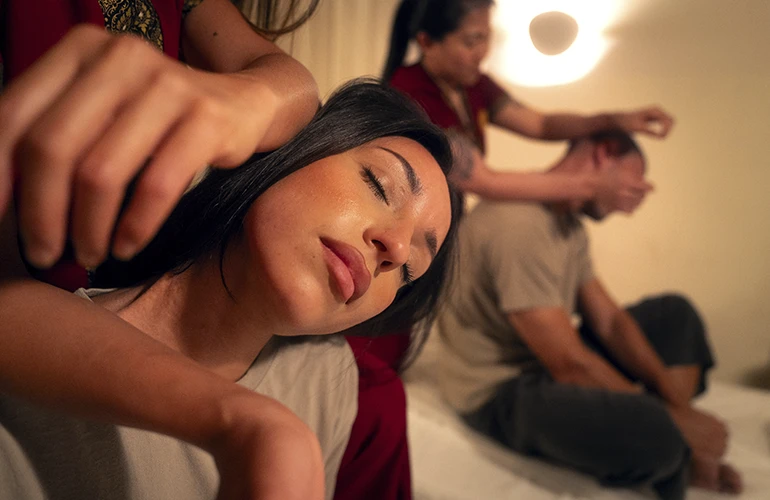
In addition to sleep meditation, a Thai massage is an excellent way to prepare the body for deep rest. This type of massage combines gentle pressure, stretching, and energy mobilization to release accumulated tension and promote a state of complete relaxation. If you want to experience truly restorative rest, at Thai Spa Massage, we offer massages designed to relieve stress and enhance your well-being. After all, a good massage is truly an art.
Incorporate meditation and massage into your nighttime routine and enjoy nights of deep, revitalizing rest. Your body and mind will thank you!