

The Thai Greeting: A Bow with Purpose
Among the most representative gestures of this approach is the Thai greeting, known as the “wai.” More than just a way of saying good morning, the wai is a sign of respect, gratitude, or apology. It consists of placing the palms together at chest level and bowing the head slightly. Its origins date back to ancient religious practices and are still common today in all settings, from everyday encounters to official ceremonies. What differentiates the Thai greeting from other similar gestures is the awareness with which it is performed: it adapts according to age, status, or the emotional context of the moment. Learning to interpret these differences is a way to better understand Thai culture and its way of understanding human relationships.

A nonverbal code full of nuances
The Thai greeting is not simply a polite expression, but a silent language with multiple layers of meaning. For example, the higher the hands are placed and the deeper the head bow, the greater the respect expressed. This variation is not random: it responds to a deep-rooted cultural hierarchy, in which experience, age, and social standing are valued. Although it may seem complicated to outsiders, Thais are very understanding when someone tries to perform the wai honestly. In fact, avoiding a handshake in favor of the Thai greeting can be a simple way to blend gracefully into any environment in the country.
This gestural code is also a way to preserve harmony. In a culture where open conflict is avoided, subtle gestures are a powerful tool for maintaining balance in interactions. Instead of raising your voice, you lower your gaze. Instead of correcting in public, you offer a smile. And instead of imposing a physical presence, you greet calmly and distantly. That delicacy is felt in everything from conversation to wellness treatments.

Greet with your body, care with your soul
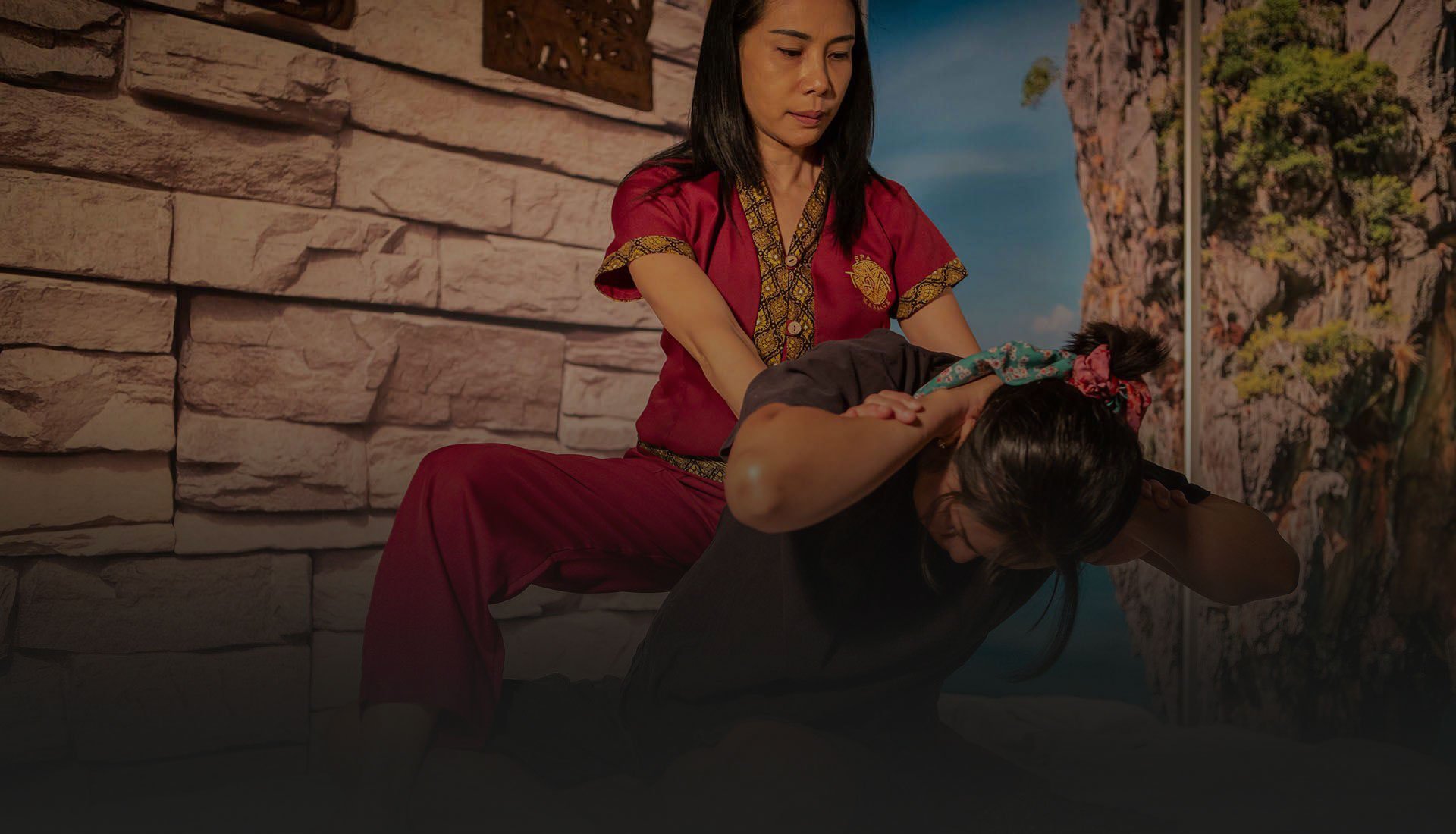
At Thai Spa Massage, we are inspired by this sensitivity to create holistic care experiences. Even if you’re not in Bangkok, the Thai greeting can become a symbol of your own willingness toward self-care and mindfulness. Beginning a massage session with a wai is a way to establish a relationship of respect between therapist and client, but also with yourself. It’s a reminder that you’ve chosen to pause, breathe, and give yourself a moment of presence.
This spirit extends beyond the massage itself. In our rooms, the décor, music, and aromas are designed so that every gesture has meaning. The Thai greeting is only the first step of a deeper journey. You can read more about our approach on our website, where you’ll find information about rituals and treatments inspired by Thai tradition.

A connection that transcends words
One of the reasons why the Thai greeting has endured for centuries is its ability to create connection without the need for words. In an increasingly fast-paced world, overloaded with information and dependent on digital communication, gestures like this bring us back to what truly matters. You don’t need to speak Thai to understand it or have lived in Asia to practice it. You only need to open space for pause, to acknowledge others, and to be serenely present.
Many travelers agree that, upon returning from Thailand, what they miss the most is not only its cuisine or landscapes, but that different way of being in the world. That calmness noticeable in the flow of the markets, in the way tea is served, or in how a greeting is offered. The National Museum of Bangkok dedicates part of its collection to explaining these everyday symbols, which may seem minor but form the deep fabric of a culture. You can explore it through its official website.

The gesture that changes your rhythm
Incorporating the Thai greeting into your life doesn’t have to be limited to a trip or a formal setting. You can make it part of your daily routine as a gesture of gratitude when you wake up, a way to close your day, or even a ritual before meditating or practicing yoga. It’s simple, requires no words or resources, and has the power to shift your inner state. It may seem small, but in Thai culture —and in our own experience— it’s the small gestures that truly bring transformation.
When you integrate this kind of practice into your daily life, you not only connect with another culture but also with yourself. And sometimes, that first step is enough to change the rhythm of a day or the tone of a relationship. At Thai Spa Massage, we believe that wellbeing begins in the invisible —in what is not said, but deeply felt. Like the Thai greeting: brief, silent, and profoundly meaningful.